The Original Vision
Before imagining the Wave Rider from the outside, this was the view from inside: a pilot looking forward into a future in which relational geometry itself might become part of the journey.
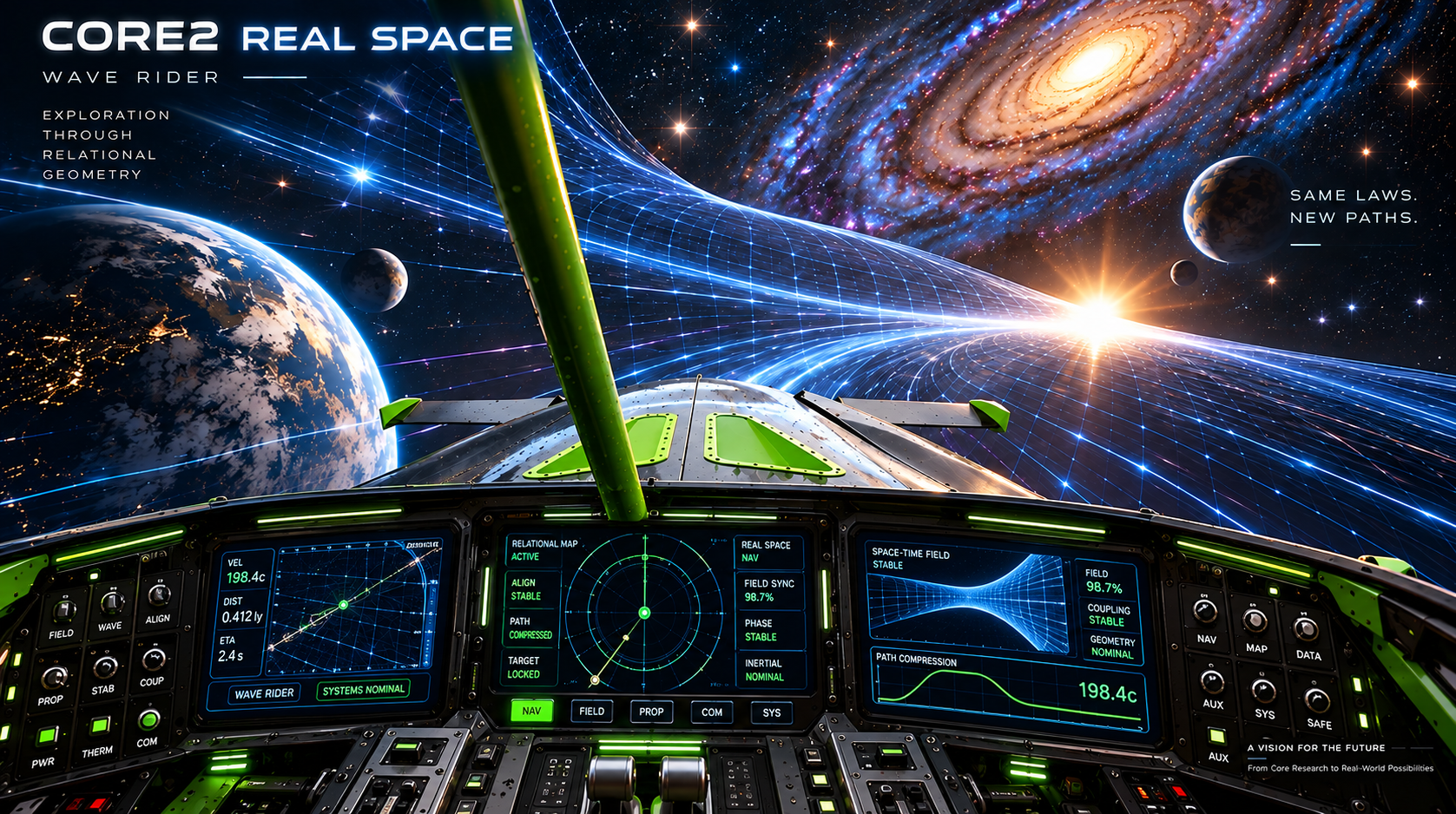
Same Laws. New Paths.
This concept image captures the original physical vision behind the series: not a spacecraft simply racing faster through ordinary space, but a vehicle exploring whether the effective path between separated locations could someday be changed while local motion remains within the causal limit.
Wave Rider What If We Could Build It?
The research pages ask whether the physics can be earned. This page asks a different question: if those ideas could someday be translated into engineering, what might a physical Wave Rider actually look like?
These images are a visual exploration of a possible future Wave Rider. The spacecraft, geometry effects, ARENA coupling, and compression states shown here are artistic visualizations. They are not photographs of an existing vehicle and do not demonstrate physical spacetime or relational-path compression. Wave Rider compression remains a research concept explored through theoretical and toy-model work.
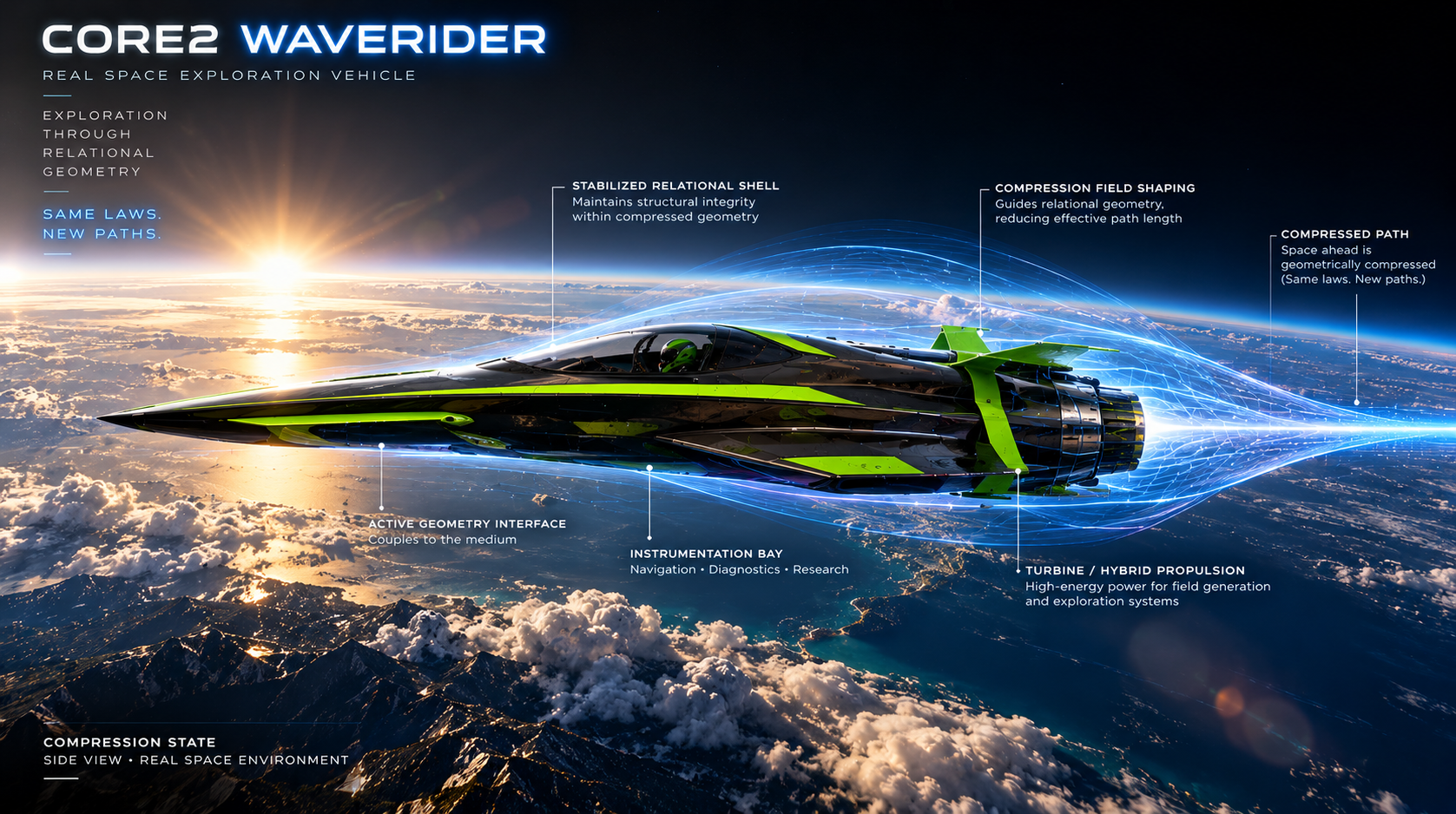
The Machine Becomes Visible
A side-view concept of a future Wave Rider imagined as a physical exploration vehicle operating inside a structured relational-geometry environment. The annotations visualize possible engineering roles; they are conceptual rather than demonstrated hardware systems.
A Wave Rider in Real Space
Before imagining interstellar compression, picture the vehicle simply existing as a physical machine: hull, cockpit, instrumentation, propulsion and crew operating above Earth.
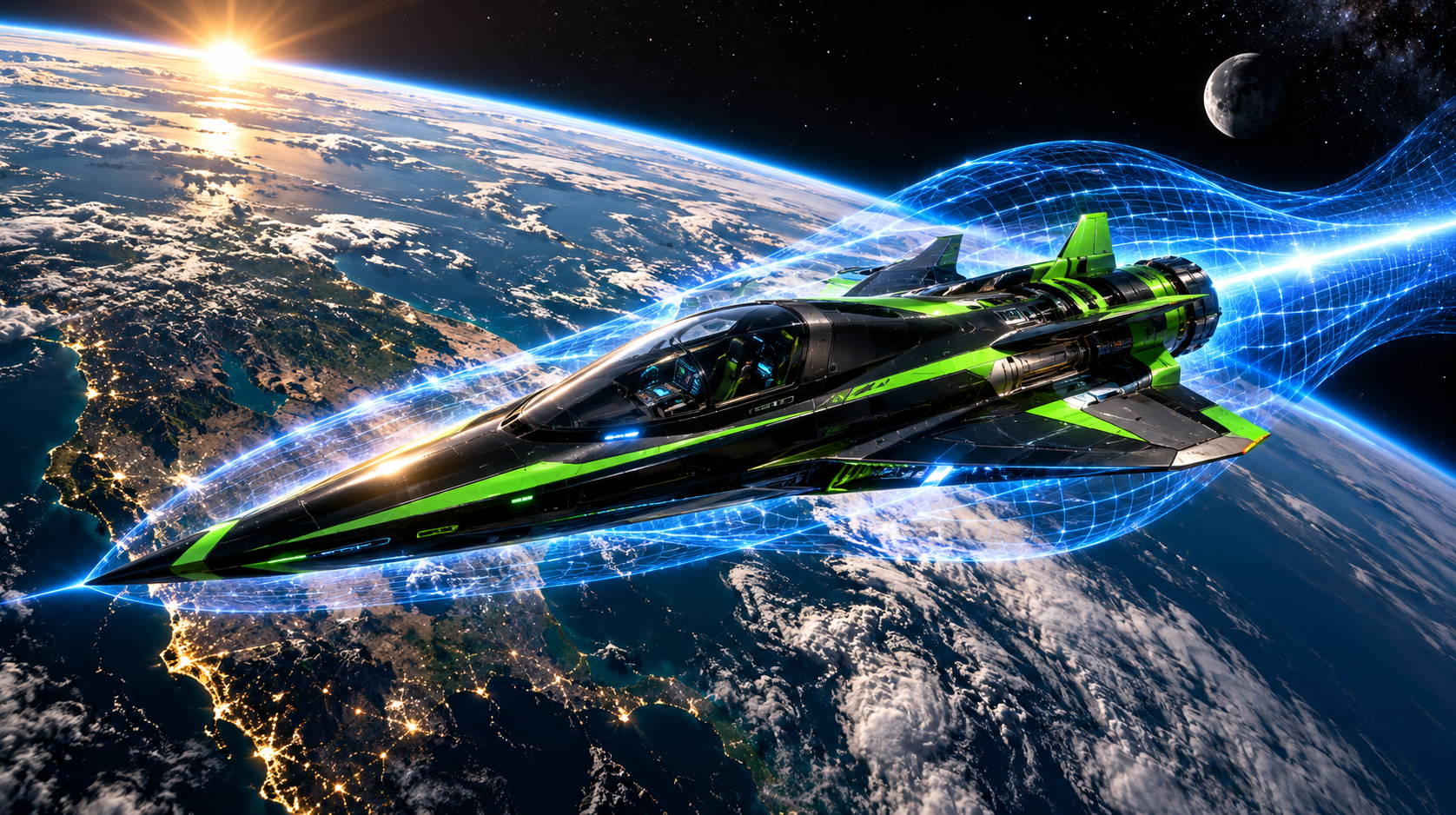
Orbital Three-Quarter View
The visual design deliberately keeps the vehicle recognizable as engineered hardware while representing relational geometry as the luminous structure surrounding it.
Entering the Compression State
The Wave Rider concept does not require the vehicle itself to move locally faster than light. The research hypothesis instead explores whether the effective relational path between separated regions could become shorter.
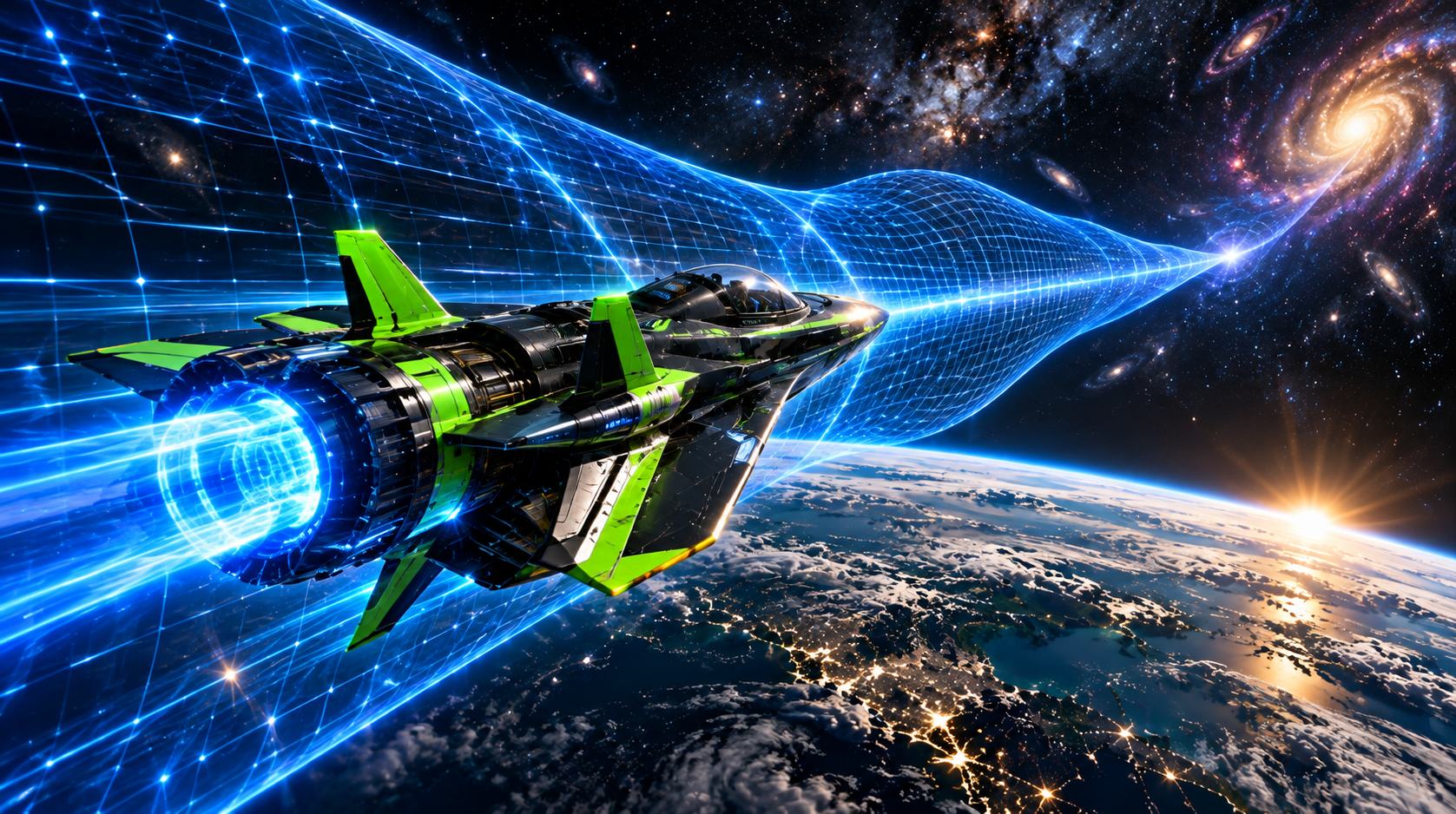
Looking Into the Corridor
A rear perspective makes the visual idea particularly clear: the craft remains locally inside its environment while the surrounding relational geometry is depicted as narrowing toward the destination.
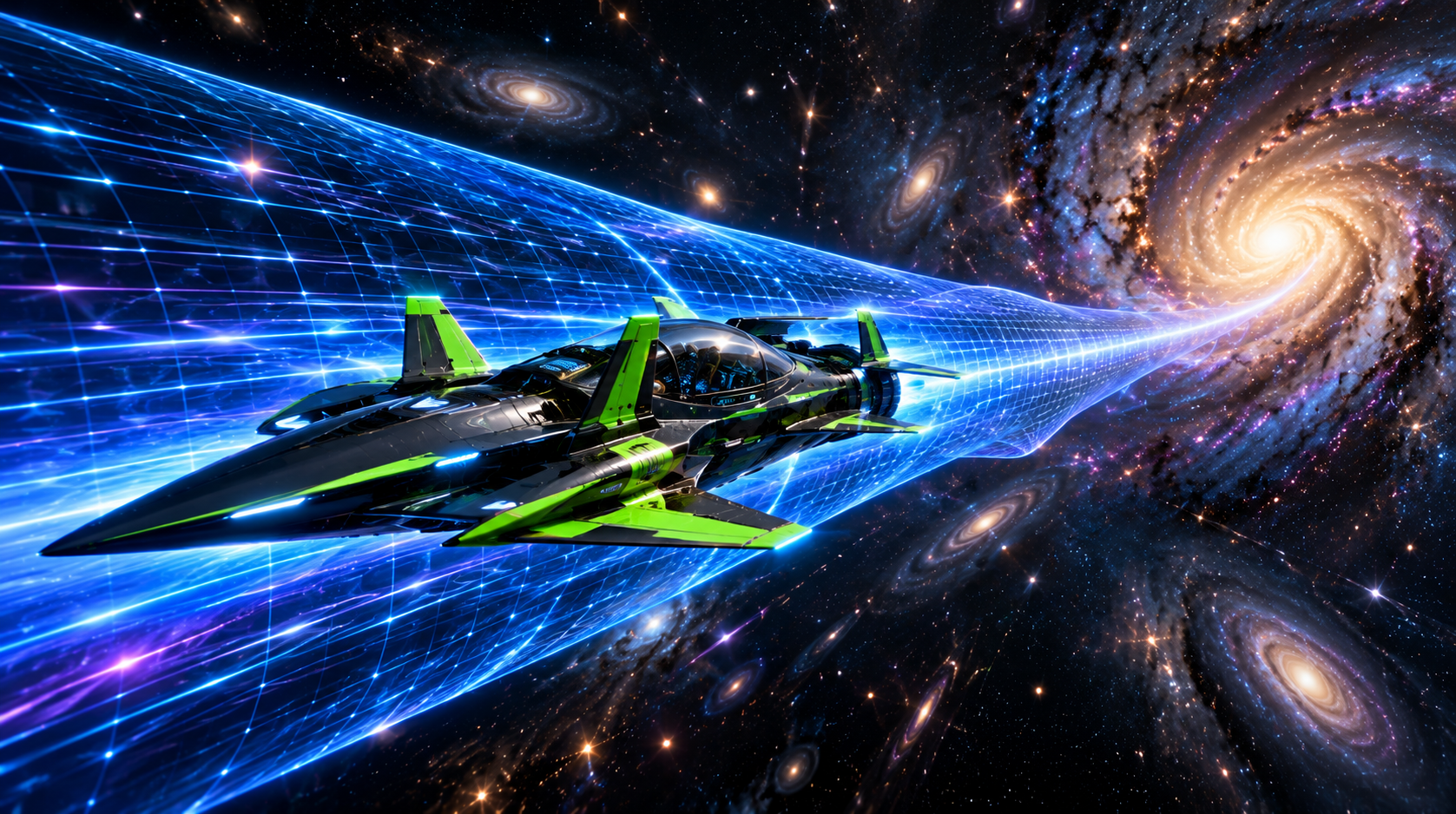
Deep-Space Compression Flight
An artistic visualization of the mature dream: a physical Wave Rider operating inside a compressed relational route toward a distant astronomical destination.
“The goal is not to make the Rider move locally faster than light. The question is whether the path itself could someday become different.”Wave Rider visual concept
Same Destination. Two Very Different Paths.
This illustration contrasts ordinary travel through the full astronomical separation with the Wave Rider research concept: reducing effective path length through relational compression while preserving the local causal limit.
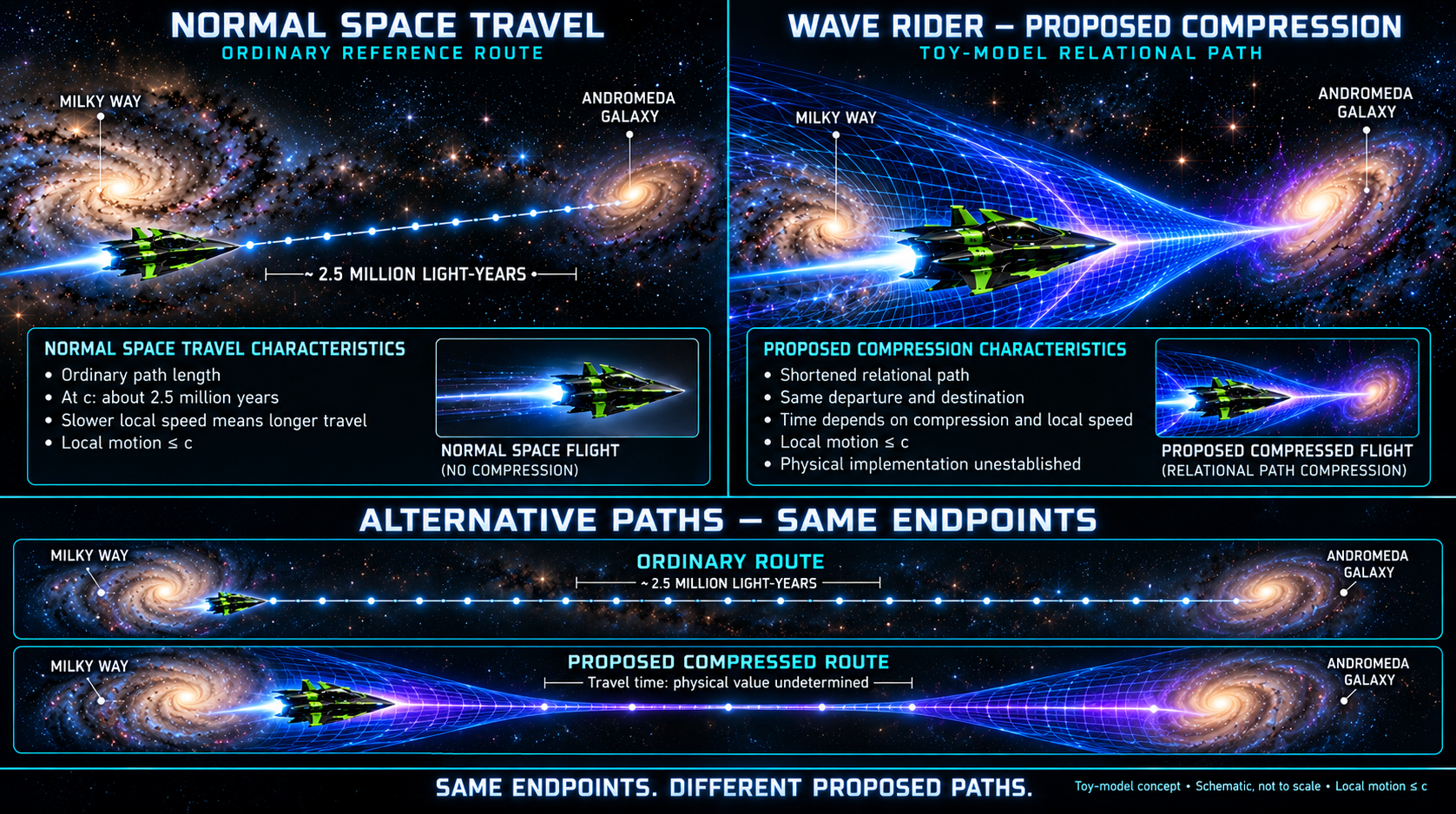
Normal Space vs. Compression-State Travel
The comparison is conceptual. The ordinary route represents traversal across the normal astronomical separation. The compression route visualizes the hypothesis that fewer effective relational steps could connect the same endpoints. The artwork does not establish that such compression occurs in physical space.
From Research to a Real Machine
A physical Wave Rider would require far more than a successful conceptual model. Each step would have to survive quantitative analysis, experimental measurement and eventually engineering validation.
Why Make This Page?
Because research needs discipline, but imagination gives us somewhere to aim.
The Wave Rider research asks whether organized relational structure could ultimately produce controlled changes in effective path length while local motion remains within the causal limit. Whether nature permits anything remotely resembling these images remains an open question.